
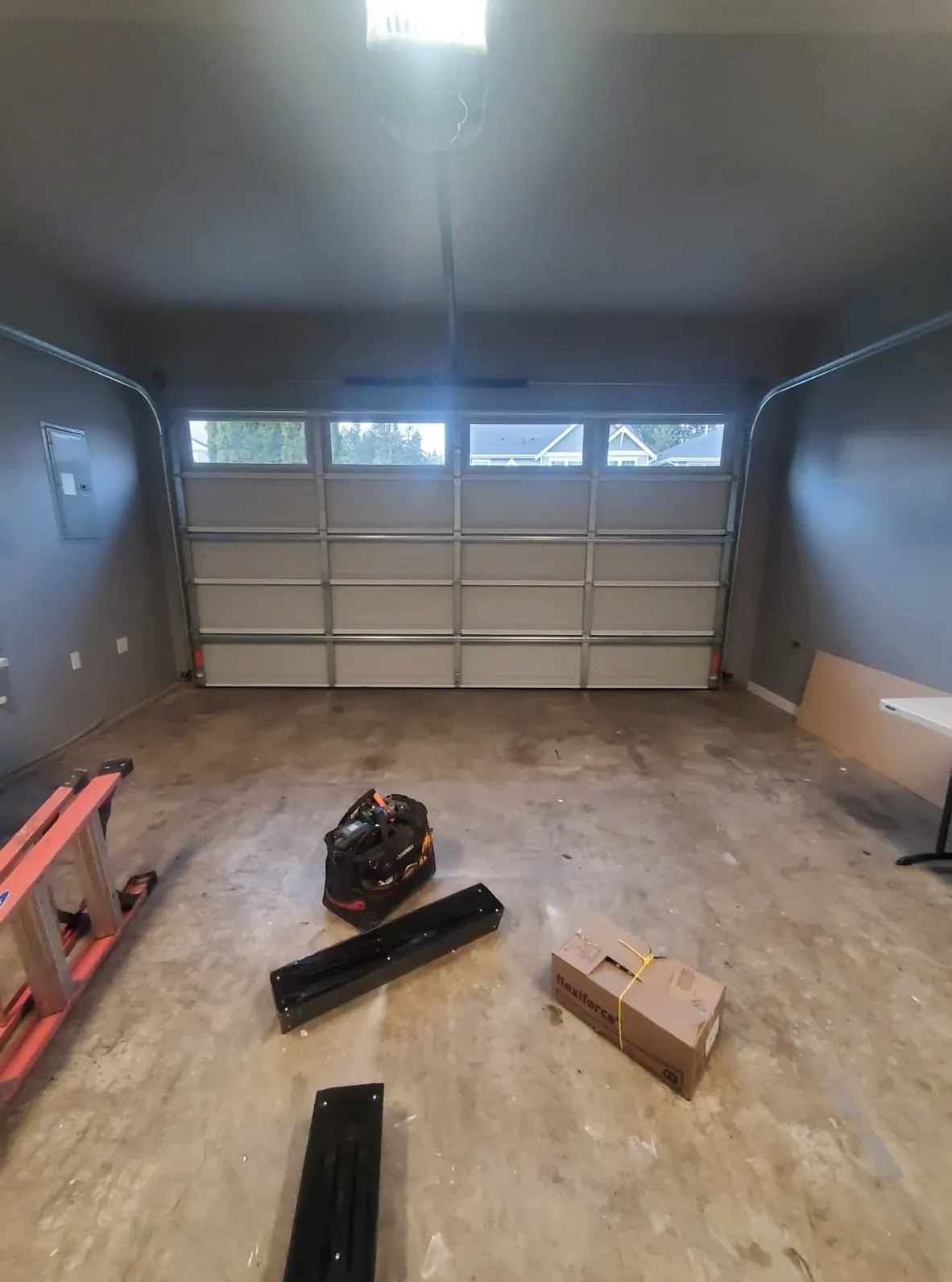
The Door Stops, Reverses, and the Light Won't Quit Blinking
You hit the button on the wall or the remote in your car, and the garage door starts down like it should — then stops a few inches off the floor and shoots back up. Or it won't even start closing at all. The opener's logic light is blinking in a steady pattern, like it's trying to tell you something in Morse code. That's exactly what it's doing. Those two small boxes mounted a few inches off the garage floor on either side of the track — the photo-eye sensors — have decided something is in the door's path, even when nothing is there.
This is one of the most common service calls homeowners along the Gulf Coast run into, and it's rarely the sensors themselves that are broken. It's almost always something blocking the beam, pulling the brackets out of line, or confusing the electronics. The good news: most of it is fixable in a few minutes once you know what to check.
What Photo Eyes Actually Do
The two sensors send an invisible infrared beam across the bottom of the garage opening. As long as that beam is unbroken, the opener assumes the path is clear and lets the door close normally. The instant something crosses the beam — a bike tire, a pet, a box, a kid chasing a ball — the door either refuses to close or reverses immediately if it's already moving. It's a federally required safety feature on every opener sold since the mid-1990s, and it's the reason a garage door can't crush something in its path the way older doors sometimes did.
Why They Trip More Often Here Than You'd Expect
In a dry, low-humidity climate, photo eyes mostly just need an occasional wipe-down. On the Gulf Coast, several local conditions stack up against them:
- Humidity and condensation fog the lenses, especially overnight and in early morning, which can block or weaken the beam until the sun burns it off.
- Salt air near Siesta Key, Longboat Key, and other coastal areas corrodes the small metal brackets and wire connections over time, loosening the sensor's aim by fractions of an inch — which is all it takes.
- Afternoon downpours kick up dirt, grass clippings, and water spots that dry directly on the lens.
- Spiders and webs love the dark, sheltered spot where photo eyes sit, and a single thread across the lens can scatter the beam enough to trigger false reversals.
- Low, angled sun in the cooler months can shine almost directly into a west-facing sensor in late afternoon, washing out the receiver the same way headlight glare blinds a driver.
- Storm-season jolts — wind load on the door, a bump from stored patio furniture, or a hurricane prep scramble — can knock a bracket just enough that the two sensors no longer point at each other.
How to Clean and Align Them Yourself
Before assuming you need a new opener or a service call, run through this:
- Power down first. Unplug the opener or shut off the breaker before touching anything near the track.
- Wipe both lenses with a soft, dry microfiber cloth. Avoid household glass cleaner with ammonia, which can leave a film. A barely damp cloth followed by a dry one works better in humid conditions.
- Check for debris and webs around and behind each sensor housing, not just on the lens face.
- Look at the indicator lights on each sensor. Most openers show a solid light on both when properly aligned, and a flickering or off light on one side means it's not receiving the beam.
- Loosen the wing nut or mounting screw on the misaligned sensor and gently nudge it until both lights go solid, then retighten without over-torquing — stripped mounts are a common follow-up problem.
- Test with something harmless in the door's path, like a cardboard box, to confirm the door reverses properly before trusting it with the real thing.
- Re-test at the time of day you had trouble. If the issue only shows up at a certain hour, sun angle is probably the real culprit, and a small shade or slight downward tilt of the sensor can fix it.
When Not to Bypass Them
Some old forum advice suggests jumping the sensor wires together to force the door to close when the sensors are being stubborn. Don't do this. A door with bypassed sensors will close on anything and anyone in its path with full motor force, and that includes kids, pets, and your own foot while you're carrying groceries in from the car. It also defeats a safety feature that matters even more here, where storm-prepped garages often have bikes, generators, patio furniture, and hurricane shutters stacked right at the opening where the beam runs. If the sensors are tripping, fix the cause — don't remove the safeguard.
When to Call Sarasota Garage Door Service
If you've cleaned the lenses, realigned the brackets, and the door still won't close reliably — or the wiring looks corroded or chewed — it's time for a technician. We handle this as part of our Garage Door Tune-Up & Maintenance visits, checking sensor alignment, wiring condition, and bracket corrosion before it turns into a failed opener board. If a storm or an accidental bump has knocked the track or sensor mount out of position entirely, that often overlaps with Off Track Door Repair, and we'll straighten both in the same visit.
If your garage door in Sarasota, Bradenton, Siesta Key, or anywhere along the Gulf Coast is giving you trouble closing, call Sarasota Garage Door Service and we'll have it diagnosed and working safely, fast.