
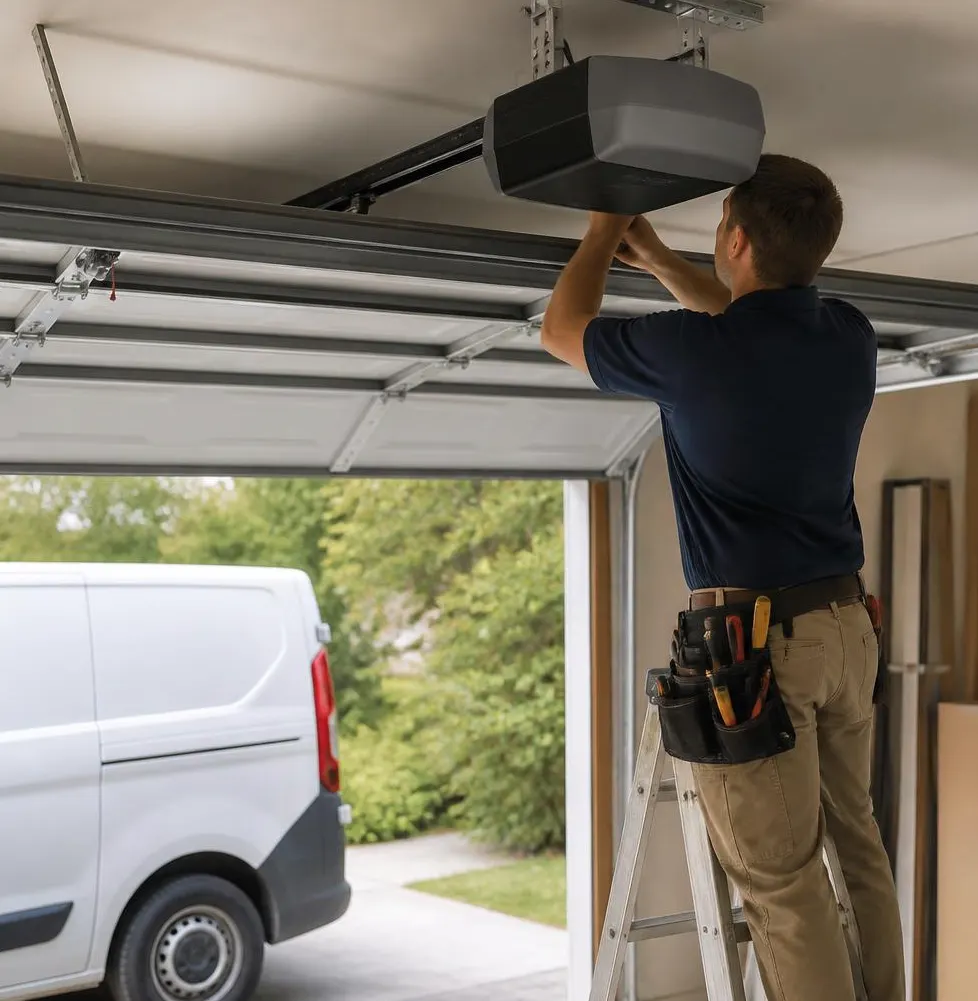
If you can see daylight under your closed garage door, or a sheet of paper slides underneath without catching, your bottom seal has failed and needs replacing — no further diagnosis required. The exceptions: if the gap is only on one side, if the door doesn't sit flat on the floor anymore, or if the seal looks fine but water still gets in, the seal isn't your real problem. That points to a bent track, a warped panel, or a door that's out of alignment, and those are jobs for a technician, not a trip to the hardware store.
For everything else, a worn bottom seal is one of the cheapest, highest-payoff repairs a homeowner can do. It blocks wind-driven rain during afternoon downpours, keeps humid air and salt-laden moisture from creeping into the garage, and seals off the gaps that palmetto bugs, lizards, and ants use to get inside once the weather turns.
Tools and materials you'll need
- Replacement bottom seal (T-style, bulb/bead, or beaded, matched to your existing track shape)
- Tape measure
- Utility knife
- Wire brush or stiff broom
- Dish soap and water, or silicone lubricant
- Flathead screwdriver (for some retainer styles)
- Work gloves
Before buying anything, look at the end of your current seal where it meets the track. Most residential doors use either a T-shaped bead that slides into a channel on the bottom of the door, or a bulb-style seal with a rounded profile for extra compression against the slab. Bring a small cut piece to the store if you're unsure — matching the profile matters more than the brand.
Step-by-step: replacing the bottom seal
- Measure the door width and buy a seal a few inches longer than needed; you'll trim it to fit.
- Raise the door partway and support it so it won't drop while you work.
- Clean the track with a wire brush, clearing out dirt, old caulk, and any rust. Coastal humidity and salt air corrode metal retainer tracks faster than inland installs, so check closely for pitting while you're in there.
- Pull the old seal out from one end of the track. If it's brittle or stuck, cut it into sections with the utility knife and remove it piece by piece.
- Lubricate the new seal's edge with soapy water or silicone spray so it slides through the channel without tearing.
- Feed the new seal into the track from one end, working it through in a steady motion rather than yanking it.
- Trim the excess flush with each end once it's fully seated.
- Lower the door and check contact along the entire width. You want even compression with no visible gaps, especially at the corners where water tends to find a way in.
Don't stop at the bottom
While you're at it, check the vinyl weatherstripping running up the sides and across the top of the door frame. Years of UV exposure and salt air leave it cracked, shrunken, or peeling away from the jamb. It's sold by the foot at most hardware stores and installs with the same basic approach: pull the old strip free, clean the frame, and press or nail the new piece into place. This is a good one to knock out before storm season winds back up, since side gaps are often where wind-driven rain gets pushed in sideways during a squall.
What's reasonable to DIY
- Replacing the bottom seal on a door that opens and closes smoothly and sits level
- Swapping out cracked or shrunken side and top weatherstripping
- Cleaning rust and debris out of the track before installing new seal
- The door won't close flush no matter what seal you install — often a sign of a bent track or an off-track door
- The seal wears unevenly or fails again quickly, which can mean a warped panel or a slab that's no longer level
- You notice resistance, grinding, or the door feels heavy when lifted manually — that's a spring or cable issue, not a sealing one
- Rust has pitted or bent the metal track itself, not just the rubber seal inside it
What needs a technician
When to call Sarasota Garage Door Service
If your seal keeps failing, the door won't sit flush, or you notice the panel itself has warped or cracked from years of humidity swings, it's worth having a technician take a look rather than replacing the same seal twice. We handle Off Track Door Repair when a misaligned track is the real culprit behind persistent gaps, and Garage Door Panel Replacement when moisture or impact damage has gone beyond what a new seal can fix. A quick Tune-Up & Maintenance visit can also catch track rust and alignment issues early, before they turn into a bigger repair heading into storm season.
If your garage door is still letting in water, dust, or unwelcome visitors after a seal swap, give Sarasota Garage Door Service a call — we serve homeowners throughout Sarasota, Bradenton, Siesta Key, Longboat Key, Osprey, Lakewood Ranch, Venice, and North Port, and we'll get it sealed up right.