
What One More Season of "It's Fine" Actually Costs
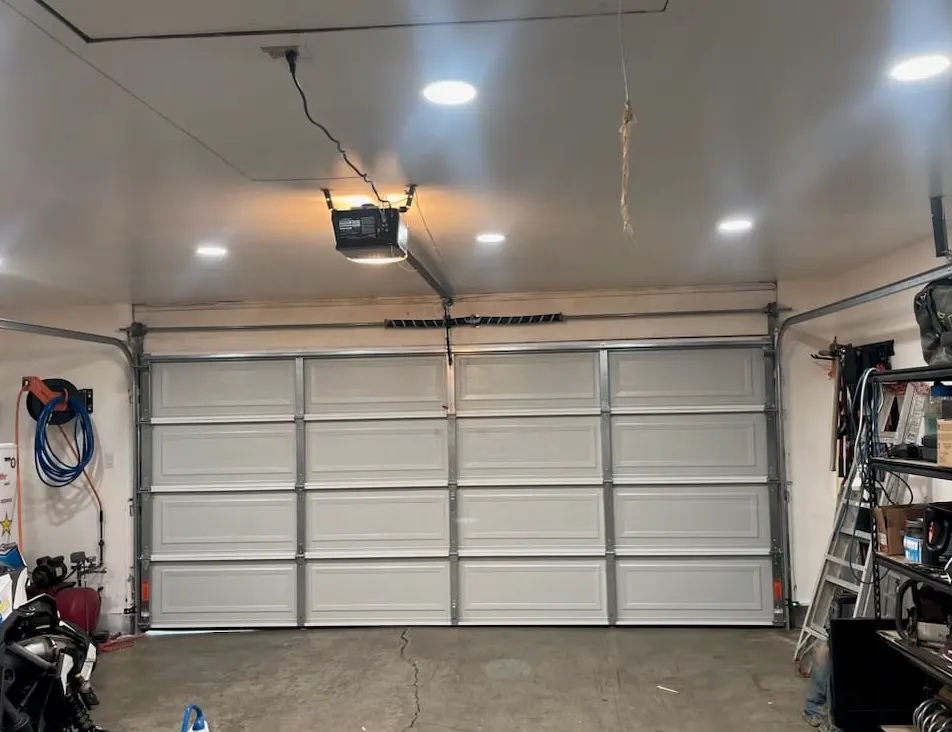
Put off a real look at your garage door system through another humid summer and hurricane season, and here's what tends to happen: the spring that's already losing tension snaps on a day you need the car, the opener motor that's been straining finally burns out mid-cycle, or the bottom panel that's been absorbing moisture swells enough that the door won't seal anymore. None of those are gradual, convenient failures. They're the kind that show up as an emergency call, usually priced higher than a scheduled repair would have been. If you and your spouse are arguing about whether the door is "fine for now" or "on its last legs," the honest answer is usually somewhere in between — and worth pinning down before storm season tests it again.
The Honest Lifespan Numbers
These are general industry ranges, not promises, because actual lifespan depends heavily on use and climate:
- Garage door (steel or wood composite): commonly 15–30 years with reasonable care.
- Garage door opener: typically 10–15 years before the motor, gears, or circuit board start failing.
- Torsion and extension springs: rated in cycles, which usually works out to roughly 7–12 years of normal use, sometimes less if the door is heavy or used multiple times a day.
- Cables and rollers: often need attention around the 7–10 year mark, sometimes sooner if they're rusted or fraying.
So if your door is a decade old and the opener is original to the house, you're both right: the door itself probably has years left, but the opener and springs may already be past the point where "it still works" means "it's not about to fail."
What Shortens That Timeline on the Gulf Coast
Climate does more damage here than most manufacturers' lifespan estimates account for:
- Salt air corrosion: hardware, springs, and hinges near the coast rust faster than inland, especially on homes close to Siesta Key, Longboat Key, or other barrier areas.
- Humidity swelling: wood and wood-composite panels absorb moisture in our thick, humid air and can swell, warp, or delaminate at the seams over time.
- Afternoon downpours: repeated soaking at the bottom panel and weatherstripping accelerates rust at the base of the door, which is usually the first place a door actually fails structurally.
- Hurricane season wind stress: doors engineered or reinforced for wind-load resistance take real physical stress every storm season, even when they hold. That stress adds up on tracks, hinges, and the opener's drive system over multiple seasons.
- Heat on openers: a garage that regularly hits high temperatures puts extra strain on opener motors and can shorten circuit board life faster than the manufacturer's rated lifespan assumes.
What Actually Extends It
None of this is complicated, but it only works if it's done on a schedule, not "whenever we remember":
- Lubricate moving parts twice a year — springs, hinges, rollers, and tracks — with a garage-door-rated lubricant, not household oil, which attracts grit.
- Check spring balance annually. Disconnect the opener and lift the door by hand halfway; it should stay put. If it drifts up or crashes down, the spring is losing tension and the opener is compensating, which wears it out faster.
- Replace weatherstripping when it cracks or flattens. This is the cheapest thing you can do to keep moisture off the bottom panel and out of the opener's electronics.
- Have the opener's force and limit settings checked after any manual adjustment or panel replacement — a motor straining against a misaligned door wears out years early.
- Keep tracks aligned and bolts tight, especially after a storm, since even a door that performed well under wind load can shift slightly and run rough afterward.
The Argument Settler
If you're trying to decide repair versus replace, ask three questions: Is the door itself structurally sound — no rust-through, no warping, no cracked panels? Is the noise or stiffness coming from springs, cables, or rollers rather than the door panel? And has the opener been serviced or inspected in the last couple of years? If the answer to all three is yes, you're looking at maintenance, not replacement. If the door panel is swollen, rusted through, or visibly out of square, that's a different conversation.
When to Call Sarasota Garage Door Service
If your door is drifting out of balance, the opener is straining or making new noises, or you just want an honest read on where things stand before hurricane season circles back around, that's exactly what our Garage Door Tune-Up & Maintenance visit is for — we check springs, cables, rollers, and opener settings in one trip and tell you plainly what needs attention now versus what can wait. If a spring has already failed or you're hearing that telltale loud pop, our Garage Door Spring Repair technicians can usually get you back up and running the same day.
Whether you're in Sarasota, Siesta Key, Bradenton, or anywhere else along this stretch of the Gulf Coast, call Sarasota Garage Door Service and we'll give you a straight answer about your door's real lifespan — no guessing required.